Google is rolling out Universal Cart in the U.S., introducing a centralized shopping experience that lets users save products from multiple retailers, track prices and complete purchases across Google Search and the Gemini app.
The new feature aims to simplify online shopping by bringing product discovery, savings and checkout into one place.
Why it matters.
Shoppers frequently discover products across different retailers and platforms, making it difficult to keep track of items, prices and promotions. Google’s Universal Cart brings those experiences together, potentially changing how consumers discover and purchase products.
What’s new:
Universal Cart acts as a shared shopping hub across Google’s services, allowing users to organize products from different retailers without losing their progress.
For example, someone can add a product while browsing AI Mode in Google Search, save another through Gemini and return later to find both items in the same cart.
How it works.
Google is introducing four key capabilities:
- Cross-retailer shopping: Save products from multiple merchants in one cart, with items accessible across supported Google shopping experiences.

- Price and inventory alerts: Receive notifications when saved products drop in price or return to stock.

- Personalized savings: Discover relevant promo codes and use Google Wallet information to identify potential payment card benefits.
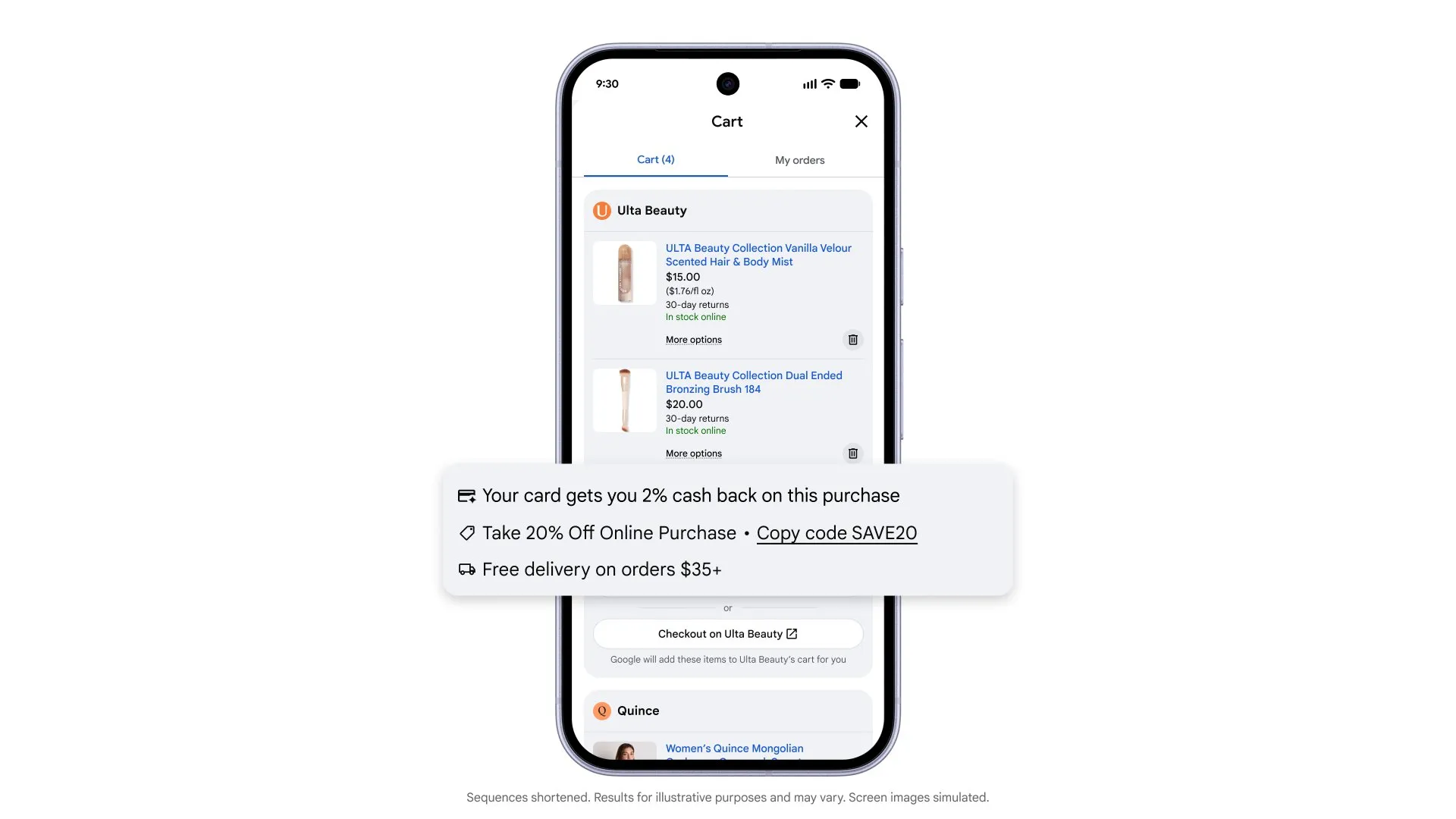
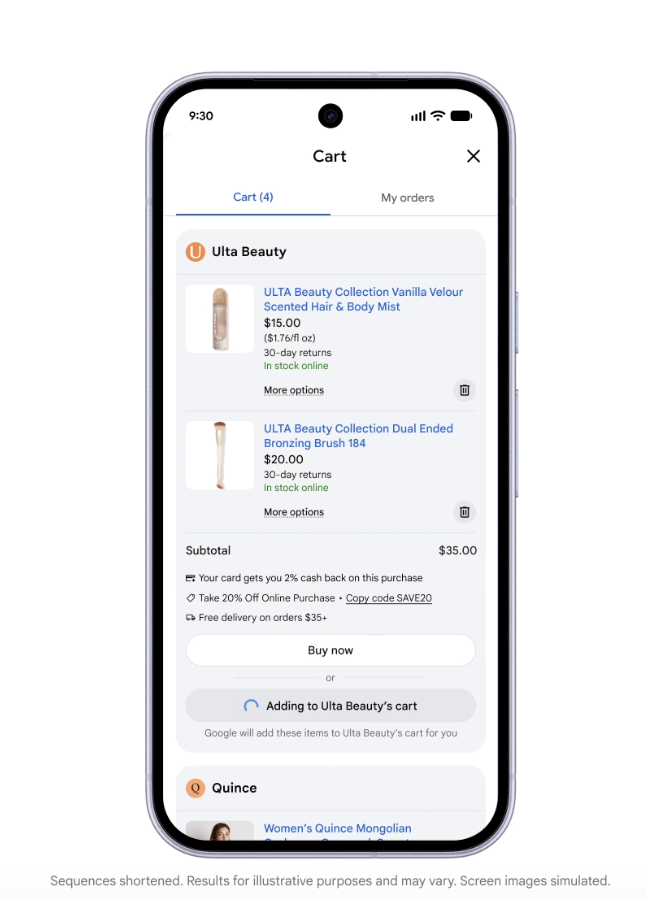
- Simplified checkout: Purchase eligible items through Google Pay or transfer products to a retailer’s website to complete the transaction.
Powered by Google’s Shopping Graph.
Universal Cart uses Google’s Shopping Graph, which contains more than 60 billion continually refreshed product listings, to monitor product information and identify changes in pricing and availability.
Google also uses intelligent reasoning to help shoppers discover savings opportunities, including promotions and eligible payment card perks.
Who’s participating.
Google says simplified checkout experiences are available with participating merchants, including Nike, Sephora, Target, Ulta Beauty, Walmart, Wayfair and many Shopify retailers.
Customers can complete eligible purchases directly through Google or continue to the merchant’s own checkout.
Importantly, retailers remain the seller of record, handling order confirmations and customer support.
Why we care.
Universal Cart could make Google Search and Gemini more influential throughout the shopping journey, extending their role beyond product discovery.
For ecommerce brands, accurate product information, competitive pricing and relevant promotions may become increasingly important as shoppers compare products and manage purchases within Google’s ecosystem.
The experience also creates another opportunity for merchants to reach consumers who discover products through AI-powered shopping tools.
The catch.
Universal Cart is currently rolling out in the United States, and checkout options depend on participating merchants. Not every retailer or product will necessarily support the same checkout experience, although shoppers can still be directed to merchant websites to complete purchases.
The bigger picture.
Google is developing two complementary approaches to AI-powered commerce: agentic shopping capabilities that can act on behalf of consumers and tools that give shoppers more direct control.
Universal Cart represents the second approach, combining AI-powered assistance with a familiar shopping cart experience.
The bottom line.
Google’s Universal Cart brings shopping across Search and Gemini into one place, combining product organization, price tracking, personalized savings and checkout. For retailers, it signals a growing shift toward shopping experiences that keep consumers connected to Google’s ecosystem from discovery to purchase.