Google Ads is testing a new Target ROAS calculator that helps advertisers determine an appropriate return-on-ad-spend target based on their profit margin.
How it works. Advertisers enter their campaign’s average profit margin excluding ad spend. Google then calculates a Target ROAS based on that margin, assuming the conversion value being reported represents revenue.
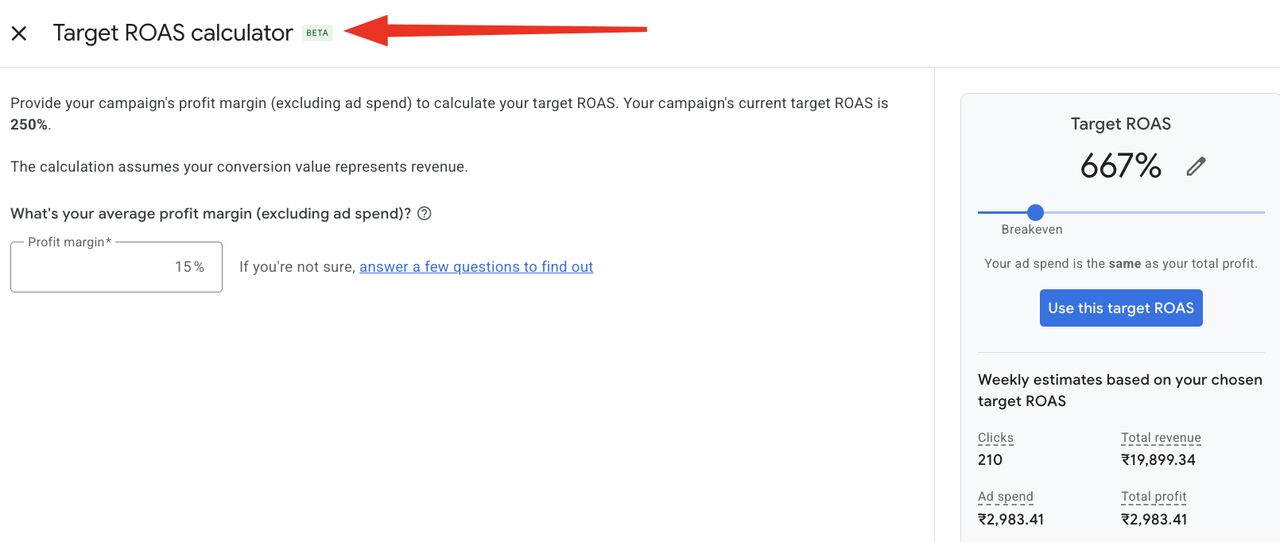
For example. In the interface shown, entering a 15% profit margin produces a 667% Target ROAS at the breakeven point. That means roughly $6.67 in revenue would be required for every $1 spent on advertising for ad spend to equal the campaign’s profit before advertising costs.
What else you get. Google also provides weekly estimates based on the selected Target ROAS, including expected clicks, revenue, ad spend and total profit. Advertisers can adjust the ROAS target and see how those estimates change before applying it to the campaign.
Need help with margins? The beta also includes an option for advertisers who don’t know their average profit margin, offering to calculate it by asking a series of questions.
Why we care. Target ROAS can look strong while a campaign is still unprofitable if margins aren’t factored into the equation. Bringing margin data into the bidding setup could help advertisers choose targets that better reflect the economics of their business rather than optimizing toward an arbitrary ROAS percentage.
Yes, but. The calculator is only as useful as the information entered. Average margins can hide major differences between products, customers and orders, while other costs such as shipping, returns, payment fees and overhead can also affect true profitability.
The bottom line. Google isn’t directly optimizing bids for profit with this calculator. But by turning an advertiser’s profit margin into a suggested Target ROAS, it’s making it easier to connect automated bidding targets with the point at which advertising actually makes financial sense.
First spotted. This update was spotted by Paid Search expert Arpan Banerjee who shared seeing the beta on LinkedIn.