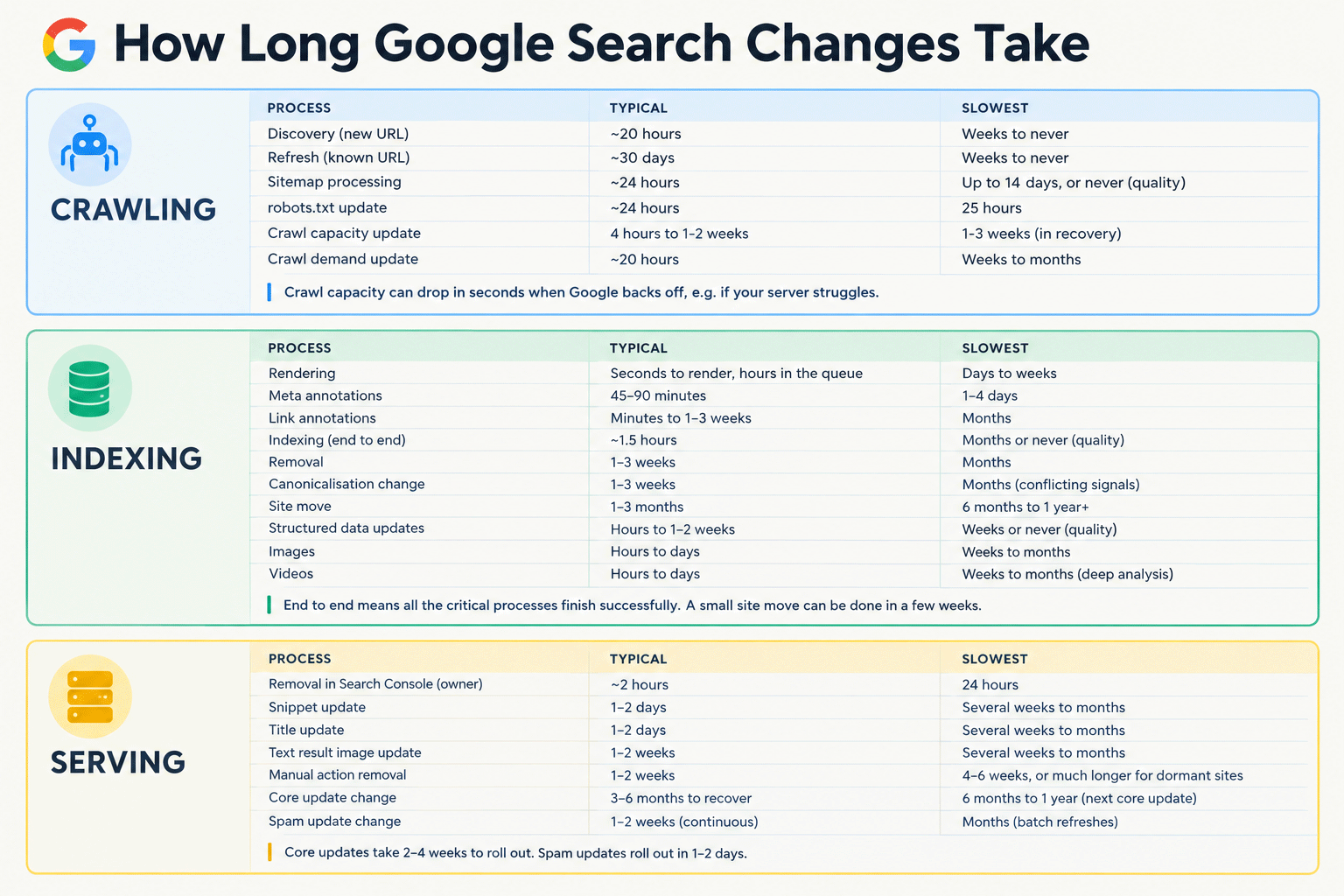
Last week at the Google Search Central Live Deep Dive event in Europe, Gary Illyes from Google presented data that told us how long it takes Google Search for crawling, indexing and serving.
This covers everything from discovering new content, refreshing that content, processing sitemaps, robots.txt controls, rendering, indexing, link annotations, removal of URLs, canonicalization, structured data, snippets, titles, core updates, spam updates and more.
The timelines. Based on the notes from John Campbell at We Are Roast, I put together this graphic that breaks down the Google Search process, the typical time and the slowest time:
More details. French SEO, Neil McCarthy, send me the slides Google posted at the event:
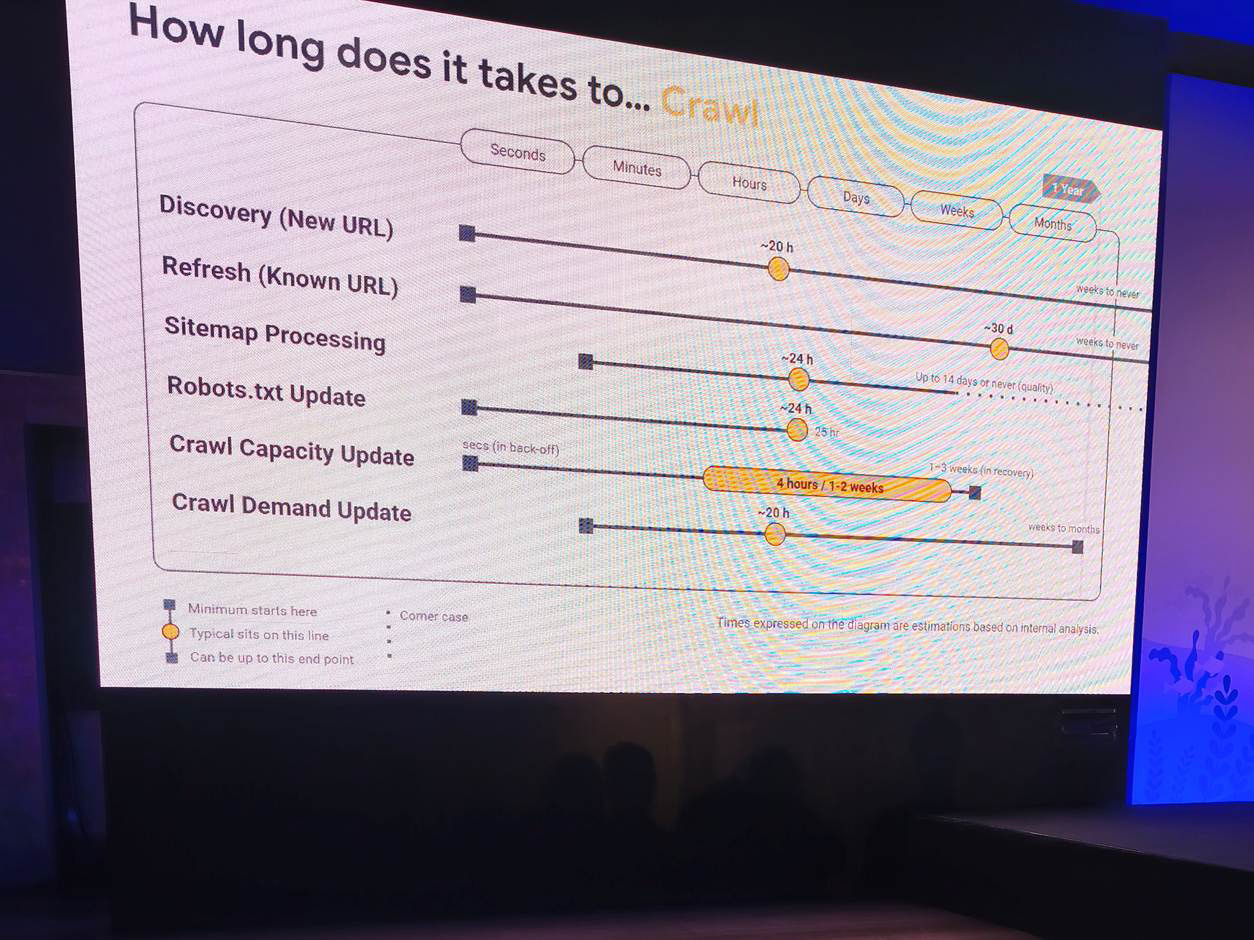
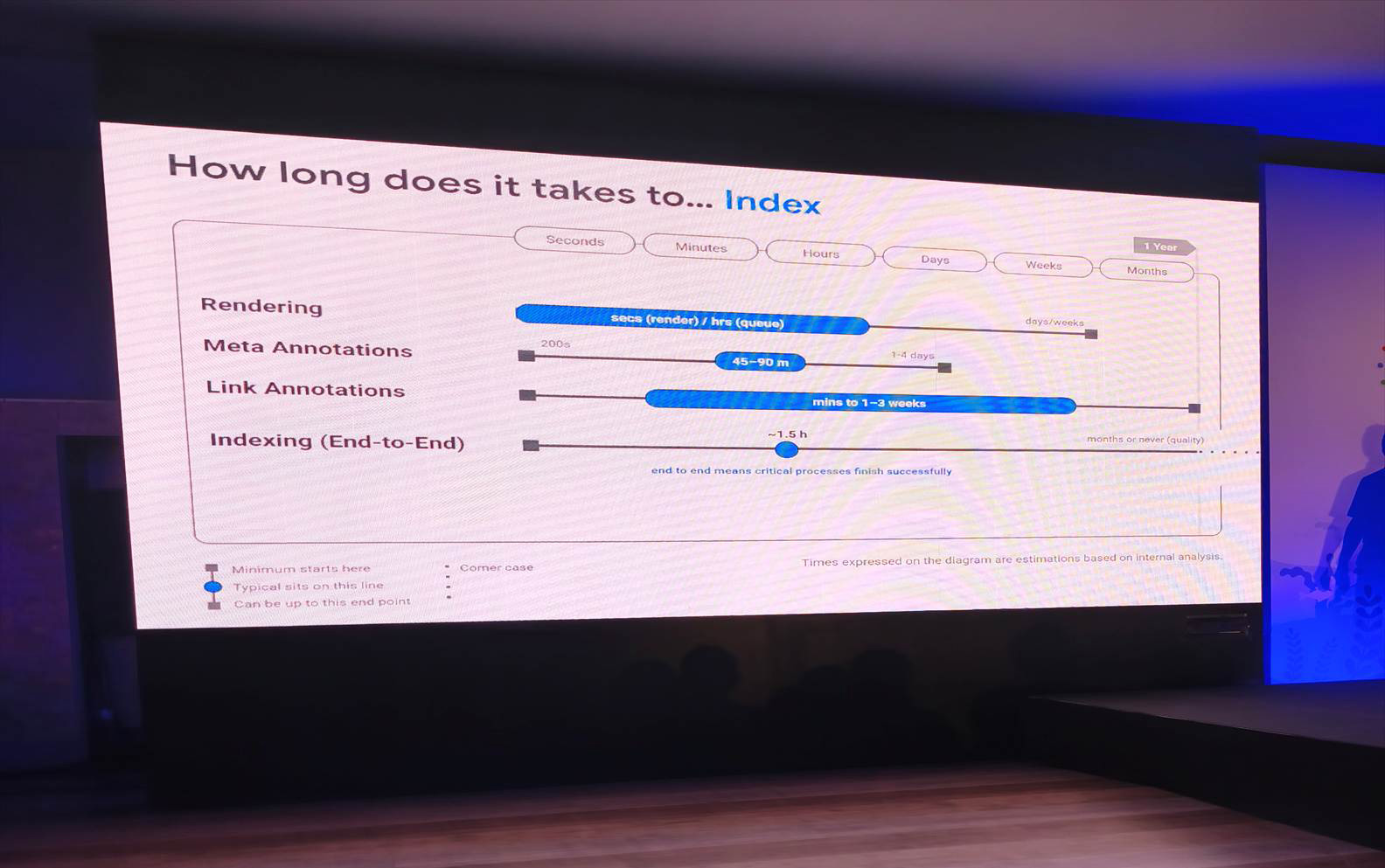

Why did Google share this. Again, this is the first time Google has presented such information at an event. Gary Illyes told me they did so “as an exercise to see if the audience can relate to the numbers we pulled internally and put in those slides.” He didn’t get any negative response, so it seemed to be okay.
I do find the “Spam update change” portion, where it says 1 to 2 days to roll out, which is typical but not with the last spam update, the September 2026 spam update, which is expected to take 2 weeks, not 2 days. I find it interesting that it says 1-2 weeks to serve and batch references after months, continuously. I am not clear on that.
Why we care. Knowing these timelines is useful for when you make changes to your site and knowing what and when to expect those changes to be reflected in Google Search. It is also useful to have this come directly from Google, documented by Google, and something to be able to reference back to.