AI traffic drives 83% more revenue per visit
AI traffic drives 83% more revenue per visit for retailers, according to Adobe. It also converted 90% better than non-AI traffic in September, which makes AI referrals hard to dismiss as a curiosity or awareness metric.
Adobe found something else retailers should pay attention to: a lot of their content still isn’t especially easy for AI systems to understand. Its Citation Readability Score put the average U.S. retail homepage at 63%, meaning more than a third of the content wasn’t readily understandable or citable by AI systems.

Those findings don’t prove that better AI readability drives more revenue. They do give marketers a good reason to look closely at which pages AI systems can understand, which pages AI-referred shoppers visit, and what those visitors do next.
AI referrals are more valuable than a year ago
In August 2025, AI traffic converted 9% worse than other traffic. By September 2026, it converted 90% better. Visitors from AI sources also spent 73% more time on site, viewed 25% more pages, and added products to carts at a 53% higher rate.
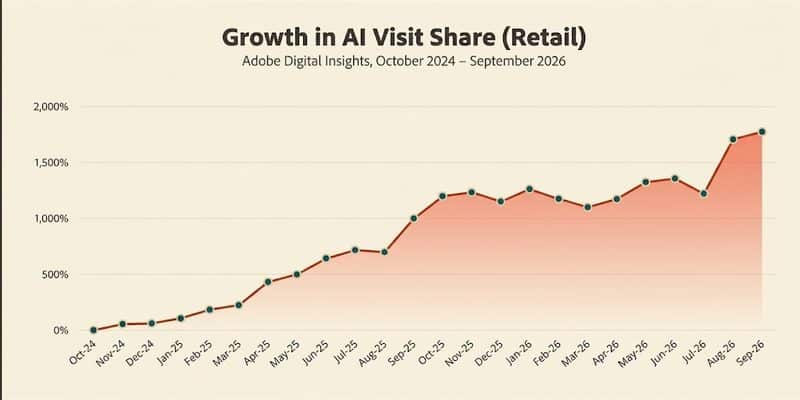
Adobe also found AI traffic to U.S. retail sites grew 71% year over year in September and 1,772% since October 2024.
The data doesn’t tell us exactly what those shoppers did before the click. A reasonable inference is that some arrived after doing more research inside an AI assistant than a typical referral visitor would have done elsewhere.
That makes the landing page more important in a different way. It doesn’t always need to start the journey. Sometimes it needs to finish it.
Explanatory content is easier for AI to understand
Adobe found the highest readability scores in content that explains products and policies.
Electronics led retail categories with an overall score of 79%, helped by category pages at 79% and customer service pages at 78%. Adobe pointed to setup guides, troubleshooting articles, and detailed specifications as examples of content that gave AI systems more context.
General merchandise homepages scored just 40%. Adobe attributed that in part to navigation-heavy, promotional layouts that gave AI less context to work with.
That doesn’t mean every homepage needs more copy. It does mean teams should look at where important product information lives and whether AI systems can make sense of it.
Measure AI traffic like acquisition
The commercial performance of AI referrals also changes how marketers should measure AI visibility.
If AI traffic converts better and generates more revenue per visit, teams should look beyond referral volume and track what happens after the click.
Conversion rate, cart behavior, revenue per visit, and customer value are more useful than raw traffic alone. Marketing operations teams should also compare the performance of different AI landing pages instead of treating AI referrals as a single source.
Adobe’s data does not establish that making content more readable to AI causes higher conversion or revenue. It shows that AI referral traffic is more valuable than it was a year ago and that some kinds of explanatory content are easier for AI systems to understand.