OpenAI is expanding ChatGPT Ads with a new visual ad format, more third-party measurement integrations and new brand suitability tools as it continues building out its advertising platform.
What’s new
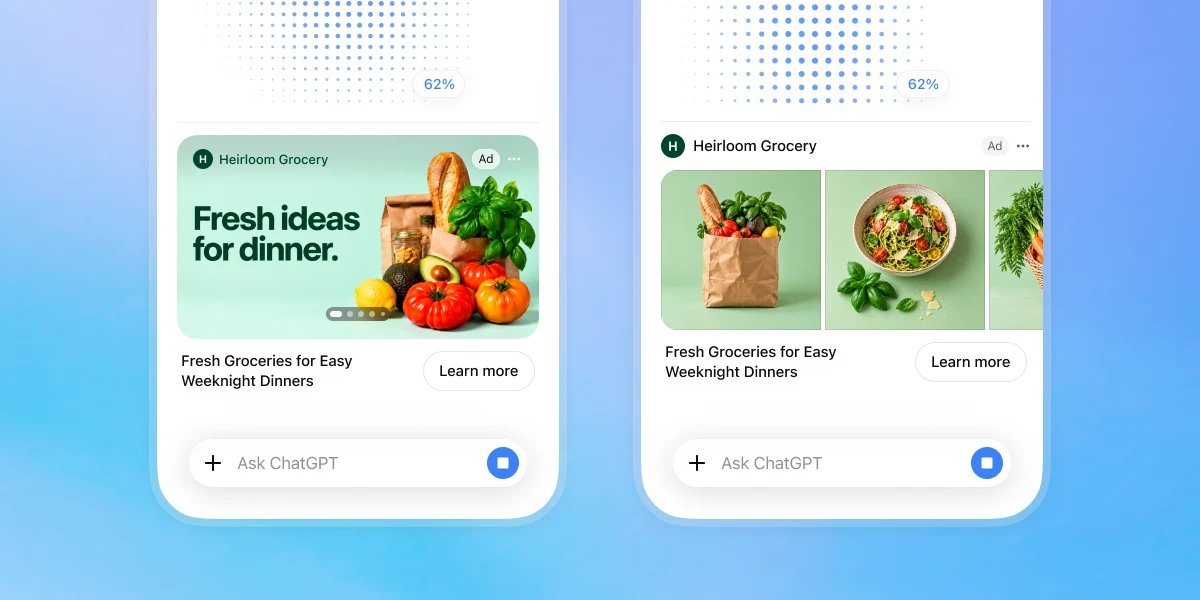
OpenAI is introducing visual ads designed to show products, services and experiences through imagery. The format will initially be tested during image generation in ChatGPT, with testing beginning later this month among a group of U.S. advertisers. Ads will be clearly labeled and kept separate from the images ChatGPT generates.
The measurement push
OpenAI is also expanding how advertisers can connect ChatGPT Ads to their existing measurement stacks. Hightouch, Tealium and LiveRamp integrations will help businesses send conversion data into the platform, while attribution partners now include AppsFlyer, Triple Whale, Adjust, DV Rockerbox, Northbeam, Branch, Singular, Kochava, Airbridge and Tenjin.
Going beyond attribution
OpenAI is working with Fospha, Measured and INCRMNTAL on full-funnel measurement, while Haus, Measured and WorkMagic are exploring geo-based incrementality experiments designed to determine whether ChatGPT Ads are causing additional conversions rather than simply receiving credit for them.
Early signals
OpenAI says DV Rockerbox measured WeightWatchers’ attributed CPA from ChatGPT Ads at 15.3% below its blended paid-search benchmark. WorkMagic found 67% of incremental purchases for Dose came from new customers, while Triple Whale reported that 93% of Portland Leather visitors from ChatGPT Ads were new. These are early partner-reported results rather than broad platform benchmarks.
Brand safety gets more attention
OpenAI is developing brand suitability evaluation pilots with DoubleVerify and Integral Ad Science. The partners will evaluate how OpenAI’s safeguards are applied in controlled environments without accessing private user conversations. Qualifying advertisers can also use Negative Phrases for more specific placement requirements.
Why we care
Better measurement could make it easier for marketers to compare ChatGPT Ads with established channels instead of evaluating performance solely through OpenAI’s own reporting. Meanwhile, visual formats give brands another creative surface as ChatGPT increasingly becomes a place where consumers research products and make decisions.
The bigger picture
OpenAI says ChatGPT now reaches 1.2 billion people each week. The combination of new formats, attribution partners, incrementality testing and independent brand-suitability work shows the company is building more of the infrastructure advertisers expect before committing larger budgets to an emerging channel.
The bottom line
ChatGPT Ads are moving beyond basic placements. OpenAI is adding richer creative, third-party measurement and brand-suitability controls in an effort to make the platform easier for advertisers to test, measure and eventually scale.